
What Determines the Price of Astralean?
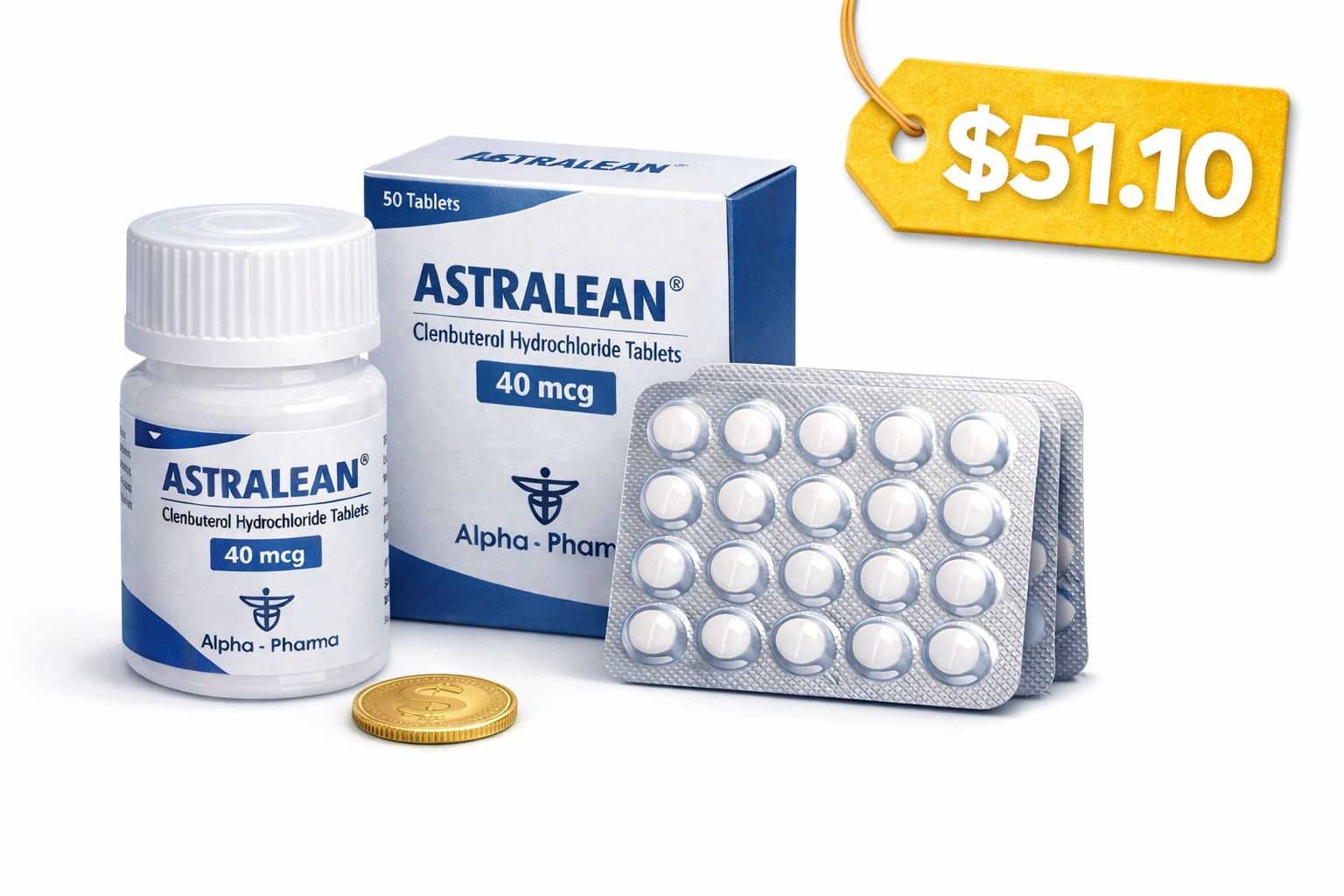 When people search for the price of Astralean, they often expect a single, fixed number. In practice, the price of a pharmaceutical product like Astralean is shaped by multiple structural factors, and wide variation is a signal to be interpreted rather than a problem to be solved.
One of the most obvious determinants is the formulation and package size. Astralean is marketed as 40 mcg tablets, but the number of tablets per package can differ. Larger packages naturally carry a higher total cost, while smaller packs may appear cheaper at first glance despite a higher per-tablet price. This distinction is often obscured in online listings, contributing to confusion and misleading comparisons. Regulatory context plays an equally important role. In jurisdictions where clenbuterol may be prescribed or dispensed within a regulated medical framework, pricing reflects compliance costs: licensing, quality assurance, controlled distribution, and professional oversight. These elements add to the final price but also provide safeguards that are absent in informal markets. By contrast, products offered outside regulated channels often bypass these costs entirely, which can make prices appear unusually low.
Brand status also matters. Astralean is a brand-name product, not a generic descriptor. Brand-name pharmaceuticals typically incorporate manufacturing controls, standardized labeling, and traceability measures that influence pricing. Comparisons with unnamed or “generic” products advertised online are therefore not equivalent, even if the active ingredient is claimed to be the same.
Geography further affects pricing. Differences in healthcare systems, reimbursement structures, import rules, and currency all contribute to variation between countries. Importantly, these differences do not imply that lower-priced products are interchangeable or legally transferable across borders.
Finally, extremely low prices deserve particular scrutiny. In the context of potent drugs measured in micrograms, price is often correlated with risk, not value. Products sold far below typical market expectations may reflect compromised quality, lack of oversight, or outright counterfeiting rather than efficiency or accessibility.
For consumers, the key takeaway is that Astralean’s price is not an isolated metric. It reflects regulatory status, packaging, brand controls, and distribution pathways. Understanding these factors helps shift the focus from “how cheap” to how legitimate and how safe.
What Does a Legal Purchase Chain Look Like?
For prescription and prescription-adjacent medicines, legality is not defined by the act of purchase alone, but by the pathway through which the product reaches the patient. This pathway, often referred to as the legal purchase chain, is designed to ensure safety, accountability, and traceability at each step.
In regulated systems, the process begins with a licensed physician. A clinician evaluates whether a drug is appropriate within the bounds of local approval and clinical standards. This step is not administrative; it serves to identify contraindications, interactions, and risk factors that cannot be assessed through self-screening. Where clenbuterol is not approved for human use, this step effectively blocks the chain from proceeding further.
If a prescription is issued in a jurisdiction where human use is permitted, the next link is a licensed pharmacy. Pharmacies are legally obligated to source medications through authorized distributors, maintain storage standards, and dispense products that match approved labeling. This includes verifying strength, batch numbers, and expiration dates. These controls exist to prevent substitution, dilution, or contamination. Documentation is a core feature of this chain. Receipts, prescription records, and labeled packaging create a paper trail that allows products to be traced back to their source. In the event of quality concerns or adverse effects, this traceability enables recalls and regulatory action. Informal sellers and online marketplaces typically lack this infrastructure, which is why problems are difficult to resolve once they arise.
The legal purchase chain also protects consumers in less obvious ways. It shifts responsibility away from the individual and distributes it across professionals and institutions that are subject to oversight. When this chain is bypassed, the burden of risk falls almost entirely on the consumer, with limited recourse if something goes wrong. Understanding this process clarifies why legality cannot be reduced to availability. A product may be easy to find online, yet still sit entirely outside the legal and medical systems designed to manage potent pharmacological agents.
Authenticity Check: Packaging, Manufacturer, and Batch Information
When it comes to potent drugs such as clenbuterol, authenticity is not a cosmetic concern. Packaging, labeling, and manufacturer information are among the few external indicators available to distinguish a legitimate pharmaceutical product from a counterfeit or misrepresented one. Understanding what these elements are meant to convey helps reduce risk, even though no single feature can guarantee safety.
Packaging Check Checklist (Risk-Focused)
Use this checklist to screen for warning signs when reviewing Astralean packaging and listing information. These indicators do not confirm authenticity, but multiple issues should be treated as a high-risk signal.
- Missing or unclear manufacturer information (no company name, no responsible entity stated).
- No batch/lot number or batch/lot information that is unreadable or inconsistent across the box/blister.
- No expiration date, or a date that appears altered, misaligned, or inconsistent with the rest of the print.
- Inconsistent product name or strength (e.g., “Astralean” and “40 mcg” not matching across the outer box and blister).
- Unusually poor print quality (blurred text, uneven fonts, spelling errors, low-resolution graphics, smudging).
- Mismatch between packaging claims and official product description (e.g., labeling details that conflict with the manufacturer’s official listing).
- Damaged or compromised packaging integrity (crushed box, broken seals, torn blisters, tablets with obvious variation in appearance).
- Seller refuses to provide clear photos of the actual item (instead uses generic “stock” images only).
- Suspicious pricing cues (dramatically below typical market range, urgency-driven discounts, “limited stock” pressure).
- No documentation trail (no receipt, no verifiable pharmacy/distributor identity, no licensing details where applicable).
- Alpha Pharma Healthcare. (n.d.). Astralean (Clenbuterol HCl 40 mcg). https://www.alpha-pharma.com/products_02_hormone_Astralean_micro.php
- National Capital Poison Center. (n.d.). Clenbuterol: Unapproved and unsafe. Poison Control. https://www.poison.org/articles/clenbuterol-unapproved-and-unsafe-201
- U.S. Food and Drug Administration. (n.d.). Counterfeit medicine. FDA. https://www.fda.gov/drugs/buying-using-medicine-safely/counterfeit-medicine
Packaging & Labeling: What to Look For (and What Should Raise Concern)
| What should be on the packaging | Why it matters | Red flag |
|---|---|---|
| Product name (e.g., Astralean) | Confirms consistent identification across materials | Name differs between box and blister, or looks improvised/overprinted |
| Stated strength (40 mcg) and dosage form (tablets) | Strength consistency is essential for microgram-dosed products | Strength missing, inconsistent, or presented ambiguously |
| Manufacturer name (responsible company/entity) | Accountability and traceability depend on identifying the responsible producer | No manufacturer listed, or details are vague/non-specific |
| Batch/Lot number | Enables traceability, investigation, and recall pathways | Absent, unreadable, duplicated across unrelated listings, or inconsistent across box/blister |
| Expiration date | Basic quality control and safety marker for regulated distribution | Missing, hard to read, appears altered, or inconsistent with other print elements |
| Consistent labeling across box and blister | Legitimate products typically maintain uniform labeling and identifiers | Box and blister show different details (name/strength/batch/expiry) |
| Legible, professional printing and layout | Poor execution is a common sign of non-standard packaging | Blurry text, uneven fonts, spelling errors, low-resolution graphics, misalignment |
| Packaging integrity (undamaged box/blisters) | Damage can indicate improper handling, repackaging, or substitution risk | Broken seals, torn blisters, crushed packaging, tablets not uniform in appearance |
| Seller provides photos of the actual item | Stock images reduce transparency and increase substitution risk | Only generic images; refusal to show the exact box/blister and identifiers |
| Basic documentation (receipt, verifiable seller identity) | Documentation supports accountability and post-purchase recourse | No receipt, no verifiable address/licensing, vague contact-only channels |
Authentic pharmaceutical packaging is designed to provide clear, consistent identification. This includes the product name, the stated tablet strength (for Astralean, 40 mcg), the dosage form, and the manufacturer’s name. Professional printing quality, uniform typography, and coherent layout are not markers of quality by themselves, but poorly executed or inconsistent packaging is a common warning sign. Batch or lot numbers and expiration dates are particularly important. These identifiers allow products to be traced back to a specific manufacturing run. In regulated supply chains, batch information enables recalls, investigations, and verification against manufacturer records. The absence of such information, or the presence of numbers that appear random, duplicated, or easily altered, undermines traceability and should raise concern.
Manufacturer transparency is another key element. Legitimate pharmaceutical products clearly identify who is responsible for production. In the case of Astralean, the manufacturer’s official product listings provide a reference point for how the product is described and presented. Comparing packaging claims with information published on the official manufacturer website can help identify discrepancies, such as mismatched names, strengths, or formulations.
Packaging integrity also matters. Broken seals, damaged blisters, or tablets that differ markedly in appearance within the same package suggest handling outside controlled conditions. While such issues can occasionally arise in legitimate distribution, they are far more common in informal or counterfeit supply chains.
It is important to stress that authenticity does not equal safety or legality. Even a product that appears genuine may still be inappropriate, unapproved, or unsafe in a given jurisdiction. Authenticity checks are therefore a risk-reduction tool, not a substitute for regulatory compliance or medical oversight.
Red Flags of Online Sellers
Online listings for Astralean and similar products often rely on persuasive language rather than verifiable information. Recognizing common red flags can help consumers avoid sources that operate outside medical and regulatory safeguards.
One of the most prominent warning signs is the claim that no prescription is required. For drugs with significant systemic effects, this framing is not a convenience feature; it is an indication that the seller is bypassing the legal and clinical checks designed to protect users. Closely related are assurances such as “safe for everyone” or “no side effects,” which contradict established pharmacology and should be treated with skepticism. (Learn more about Side Effects, Risks, and Interactions of Astralean (Clenbuterol))
Pricing is another signal. Offers that are dramatically lower than typical market expectations are rarely the result of efficiency alone. In practice, unusually low prices often reflect compromised quality, dilution, substitution, or outright counterfeiting. Aggressive discounts tied to urgency (“limited stock,” “act now”) further suggest marketing tactics rather than regulated distribution.
Transparency about the seller matters as well. Legitimate pharmacies and distributors provide verifiable contact details, licensing information, and a physical address. Sellers that obscure their location, rely solely on messaging apps, or refuse to provide documentation reduce accountability and make post-purchase resolution difficult or impossible.
Finally, payment and shipping practices can reveal risk. Requests for unconventional payment methods, lack of receipts, or vague shipping guarantees indicate operations outside standard consumer protections. Taken together, these red flags point less to a bargain and more to elevated health and legal risk.
Why Counterfeiting Is Especially Dangerous With Clenbuterol
Counterfeiting is a risk for many medicines, but it is particularly dangerous with clenbuterol because of the drug’s pharmacological profile. Clenbuterol is active at very low doses, and the difference between a dose that produces noticeable effects and one that causes toxicity can be small. When this margin is combined with unregulated manufacturing, the potential for harm increases substantially.
One of the central problems with counterfeit clenbuterol products is dose inconsistency. In legitimate pharmaceutical production, microgram-level dosing requires precise measurement and quality control. Counterfeit products often lack this precision. Tablets may contain far more or far less active substance than stated on the label, and variability can occur not only between batches but within the same package. For a drug that affects heart rate, blood pressure, and nervous system activity, such variability can lead to unpredictable and dangerous responses. Another concern is the presence of undeclared substances or impurities. Counterfeit or adulterated products may include other stimulants, β-agonist analogs, or contaminants introduced during crude manufacturing processes. These additions are not disclosed to the consumer and may interact synergistically with clenbuterol, amplifying cardiovascular and neurological stress. From a clinical perspective, this complicates diagnosis and management when adverse symptoms occur, as neither the patient nor the clinician may know what was actually ingested.
Poison Control sources emphasize that clenbuterol has been associated with serious toxic effects, including significant tachycardia, tremor, agitation, and electrolyte disturbances. When counterfeit products are involved, these effects may appear suddenly or at unexpectedly low exposures. The lack of traceability further limits the ability to investigate or recall problematic products.
Counterfeiting undermines any remaining safeguards. There is no reliable way to verify composition, no accountability if harm occurs, and no mechanism for corrective action. With a potent sympathomimetic drug like clenbuterol, this absence of control transforms an already risky substance into one with substantially elevated danger.
FAQ: Price, Originality, and Safe Sourcing
Why does the price of Astralean vary so widely?
Price differences usually reflect variations in packaging size, regulatory context, and distribution channels. Extremely low prices are often a warning sign rather than a benefit, as they may indicate products sold outside regulated supply chains.
Can authenticity be verified online before purchase?
Authenticity cannot be reliably confirmed online alone. While packaging images and descriptions may look convincing, counterfeit products frequently imitate legitimate designs. Verification is strongest when products move through licensed medical and pharmacy systems.
Is a very low price always a red flag?
In the context of a potent, tightly regulated drug, a price far below typical expectations should prompt caution. Low cost often correlates with lack of oversight, compromised quality, or counterfeiting rather than efficiency.
Does professional-looking packaging guarantee safety?
No. Counterfeiters increasingly produce high-quality packaging. While poor packaging is a warning sign, polished presentation does not ensure accurate dosing, purity, or legality.
What should raise immediate concern when evaluating a seller?
Claims such as “no prescription needed,” guarantees of safety, lack of verifiable contact information, and pressure to purchase quickly all indicate elevated risk.


